The Strategic Use of Debt Fueling Growth, Reducing Taxes
Debt. It’s not just that ominous financial cloud hanging over entrepreneurs’ heads—when handled wisely, it’s more like a jetpack strapped to your back.
Yep, you read that right. Instead of being weighed down, strategic debt can launch your business into the stratosphere.
It’s not just about borrowing money; it’s about understanding how to use it as a lever to create wealth, fund expansion, and yes, even reduce taxes.
Let’s dig into why debt is more than just an IOU; it’s a pathway to unlocking new opportunities that cash savings or equity funding can’t always deliver.
Debt as a Tool for Wealth Creation
Now, here’s where things get interesting: debt isn’t about losing— it’s about gaining.
By tapping into borrowed capital, entrepreneurs can keep their cash safe in reserves and still invest in growth.
Imagine this: a business owner walks into a bank, takes out a loan, and suddenly the doors of opportunity swing open—without draining the company’s savings account.
a. Leveraging Debt for Faster Growth
Expanding operations, acquiring real estate, launching new products— these aren’t dreams. They’re achievable realities when you use debt wisely:
Opening new branches: You know that feeling when your business is ready to grow, but your bank account doesn’t agree? Well, a loan can bridge that gap. Suddenly, there’s budget for a new location, a few extra hires, or a robust marketing campaign to bring in more customers.
Buying real estate: Here’s a little secret: debt is the real estate investor’s best friend. Buy now, pay later—meanwhile, that property appreciates, tenants cover the mortgage, and there are tax deductions to boot.
Launching new products: Instead of draining your reserves, use a loan to fund the next big thing—be it R&D, aggressive marketing, or both. Borrowed money transforms into potential revenue streams. And if the returns beat the interest rate, you’ve got yourself a win-win.
When the returns from these ventures surpass the interest on the debt, profits soar.
It’s the classic concept of “other people’s money,” but with a modern twist. And it’s faster than waiting for equity alone to fuel growth.
b. Using Debt For Business Growth
Real estate, again: With a mortgage, you’re not just paying to own property; you’re paying to control appreciating assets.
The best part? Rental income often covers the loan, while depreciation and interest deductions lower your taxes.
Machinery and equipment: Financing equipment isn’t just about getting shiny new tools for production; it’s about increasing capacity and revenue. You pay over time, but the returns can start right away, covering the loan and then some.
When debt-financed assets generate more income than the cost of borrowing, it’s not just wealth building—it’s smart business.
c. Scaling Without Selling Your Soul (or Ownership)
Ever feel like you’re giving up too much control when bringing on investors? Debt offers a way out.
Unlike venture capital, which often demands a chunk of equity and control, debt lets you keep the reins. It’s like getting the best of both worlds— growth capital without the compromise.
Debt: The Tax Benefits
Here’s where debt really starts to shine: reducing taxes. Yes, you read that right. Debt isn’t just about funding growth; it’s about saving you money when Uncle Sam comes knocking.
Let’s break it down:
a. Interest Deductions
One of the juiciest perks of business debt? The interest is typically tax-deductible.

Borrow $100,000 at 5% interest, and that $5,000 interest payment reduces your taxable income.
It’s a simple equation that makes debt cheaper than it first appears, especially when you factor in the tax savings.
b. Combining Depreciation and Interest for Real Estate
Got debt on real estate or big equipment? It’s a double whammy. Not only do you deduct the interest, but you also get depreciation deductions—spreading the asset’s cost over time.
It’s like slicing a big tax bill into smaller, digestible pieces. Imagine this: you buy a commercial building with a mortgage.
Not only are you writing off interest payments, but you’re also depreciating the asset over time, reducing your taxable income year after year. It’s one of the smartest tax moves in real estate—tax efficiency at its finest.
c. Deferring Taxes—Using Debt to Buy Time
Debt isn’t just a funding strategy; it’s a tool for delaying taxes.
How? By borrowing to acquire revenue-generating assets, you can reinvest earnings instead of paying immediate taxes.
This strategy works best if you expect to be in a lower tax bracket in the future or if the reinvested earnings yield even higher returns.
For example, leveraging debt for real estate investin. Let’s say you use a loan to buy a rental property.
Instead of paying taxes on current gains, you reinvest those earnings into further growth, allowing for compound returns over time. In essence, you’re buying time and growth—at the same time

Smart Debt Management: Keep It in Check
While debt can be a game-changer, it’s no magic bullet. It requires management, discipline, and strategy.
Here’s how to keep debt working in your favor:
a. Balance Your Debt-to-Equity Ratios
Borrowing too much can tip the scales, making cash flow tight and risky.
Maintaining a healthy debt-to-equity ratio ensures that you’re not over-leveraging the business.
You want enough debt to fuel growth, but not so much that you can’t sleep at night.
b. Hunt for Low-Interest Options
Not all debt is created equal. Low-interest loans, government programs, and small business financing are often available at rates that make borrowing attractive.
The lower the interest, the higher the retained profits, as less of your revenue goes toward servicing debt.
c. Refinance When the Time is Right
As your business grows, your credit rating improves.
That’s when it’s time to renegotiate existing loans—refinancing to lower interest rates or better terms.
It’s like giving your finances a facelift, making room for more growth.
d. Finance Income-Producing Assets
Always aim to use debt to buy assets that generate revenue.
Whether it’s rental properties or equipment, the income covers the payments and boosts profits. For example, new machinery can increase production, leading to more sales and profits.
For example, new machinery can increase production, leading to more sales and profits.
e. Hedge Against Inflation with Debt
Inflation erodes the value of money over time, but it doesn’t change the amount of debt you owe.
By borrowing today and repaying tomorrow, you’re effectively using cheaper future dollars to settle today’s obligations.
Meanwhile, if you’ve invested in appreciating assets, you’re benefiting from rising values—double the win.

Real-Life Examples of Using Debt Wisely
a. Real Estate
A savvy investor uses borrowed funds to buy a commercial building. Rental income covers the mortgage, while the building’s value rises. Tax-deductible interest and depreciation create a tidy package of savings and profits.
b. Expanding Your Business
Real estate investors even have the luxury of the 1031 exchange, which allows deferring capital gains taxes by reinvesting proceeds into a similar property.
c. Equipment Financing
A manufacturing company borrows to buy new machinery. Production capacity increases, revenue rises, and both interest and depreciation deductions reduce taxes. The cycle of growth continues—fueled by strategic debt.
Debt Done Right
When managed well, debt isn’t a burden; it’s a tool—an accelerant for growth, a builder of wealth, and a tax reducer.
By using debt wisely to acquire assets, fund expansion, or hedge against inflation, entrepreneurs can achieve faster growth and greater profitability.
The trick? Balancing debt levels, securing favorable terms, and channeling funds into growth-generating projects.
It’s not just about borrowing money; It’s about borrowing for success.
Be the greatest you can be…
Join us, click the link below for short, sharp, simple video courses that give you confidence and street-smart business skills to simplify accounting and focus on growing your business to succeed.

Latest Posts
AI for Small Business:
Do You Really Need AI Skills?

AI means smart computer tools that can do tasks people usually do. Some AI can write text, make pictures, answer questions, or look at data and find patterns.... READ: AI for Small Business
Good Debt vs Bad Debt:
How Debt Can Build Wealth
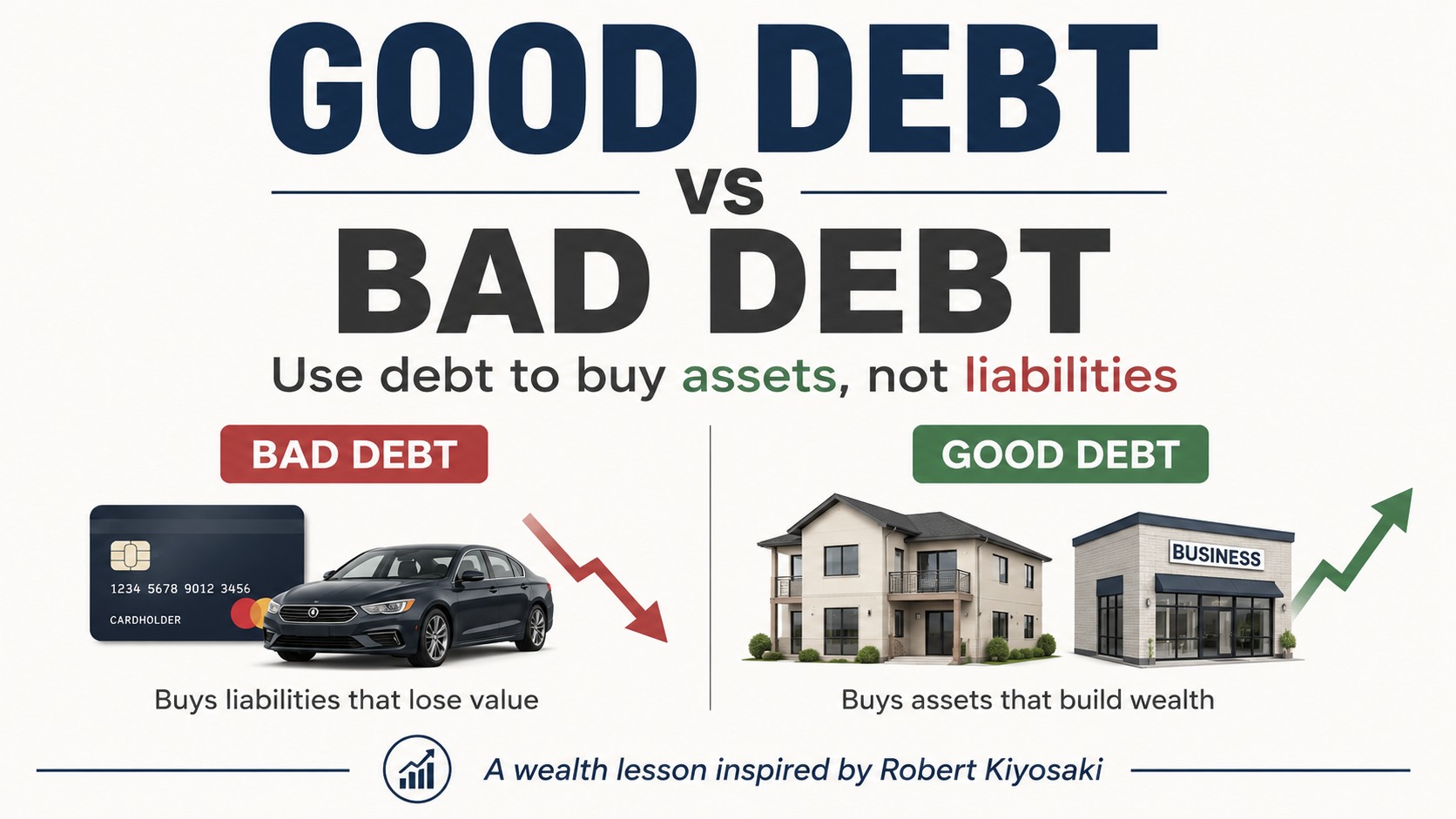
Most people are taught that all debt is bad. Pay off the house. Cut up the credit cards.Never borrow money. Stay debt-free.
How To Help Your Business
Survive A Shaky Economy

A business does not survive by guessing. A business survives by watching cash, protecting customers, cutting waste....
7 Money Moves Every
Small Business Should Make

This is why cash flow management tips matter more in uncertain times. When things get shaky... READ: 7 Money Moves Every Small Business Should Make
Prevent Financial
Statement Fraud Using Ai

The 7 internal controls to prevent fraud (and stop financial statement fraud early).These are the “boring” habits that protect smart
6 Secret Business
Tips

Ever feel like you’re working hard… but the money still feels “mysterious”? But you can’t always tell what’s actually moving the needle?


Disclaimer: The content shared on this blog and in these videos is for informational and educational purposes only. Despite my 30 years of experience as a business owner, I am not a certified financial advisor, accountant, or legal professional. The insights and tips shared are based on personal experiences and should not be taken as professional financial or legal advice. For financial, legal, or professional advice, please consult with a certified professional in the respective field. I disclaim any liability or responsibility for actions taken based on any information found in this blog or these videos.
This is general education only. For tax advice, speak to a qualified tax professional in your country.
Copyright Learn Accounting Fast - All Rights Reserved 2025
Facebook
Instagram
X
LinkedIn
Youtube