How To Keep Your Business Alive When Prices Keep Rising
Why Small Business Owners Must Stop Guessing With Money
There is one truth every small business owner must understand.
Cash is blood.
If the blood stops flowing, the body is in trouble.
A business is the same.
You can have customers. You can have sales. You can even show a profit on paper.
But if there is not enough cash in the bank to pay wages, rent, stock, fuel, loans, and bills, the business starts to feel sick.
That is what many small business owners are feeling right now.

Prices keep rising.
Suppliers are charging more.
Fuel costs more.
Wages are higher.
Rent is higher.
Software costs more.
Even simple things like bank fees, delivery fees, and card fees seem to creep up quietly.
And the owner is left asking one painful question:
“I’m making sales… so why am I still broke?”
That is the problem.
And the truth is, it is not always because the business is bad.
Sometimes the business is working hard.
But the money system is weak.
The Real Problem: Profit Is Not Cash
This is where many business owners get caught.
They think profit and cash are the same thing.
They are not.
Profit is the result of performance on paper. Cash is the money sitting in the bank.
A business can make a profit and still have no cash.
How does that happen?
Simple.
You sell a job today. The report says you made money. But the customer does not pay for 30 days.
In the meantime, you still have to pay wages, stock, fuel, rent, and bills.
So the profit is on paper.
But the cash is not in your hand.
That is why a business can look good on paper and still feel like it is choking.
This is even more dangerous when prices are rising.
Because every dollar going out gets heavier.
The business owner starts working harder, selling more, taking more jobs, and staying busy.
But the bank account still feels weak.
That is not just stressful.
It is dangerous.
Because when cash gets tight, owners start making rushed decisions.
They delay bills.
They take bad jobs.
They undercharge.
They borrow too quickly.
They panic.
And panic is not a business plan.
The Opportunity: You Can Take Back Control
Here is the good news.
You do not need to become an accountant.
You do not need to understand big, fancy reports.
You do not need to sit for hours staring at numbers.
You just need a simple weekly money check.
One clear habit.
Once a week.
15 minutes.
That is enough to help you see what is really going on.
Because the goal is not to know every number.
The goal is to know the right numbers.
The numbers that tell you:
Are we safe?
Are we tight?
Are we in danger?
What needs fixing first?
That is real financial literacy for business owners.
Not big words. Not theory. Not confusing reports.
Just knowing where the cash is, where it is going, and what to do next.
That is how you stop guessing.
The Simple Solution: Use A Weekly Cash Check
A weekly cash check is one of the most useful skills for business success.
It does not need to be hard.
It does not need to be perfect.
It just needs to be done every week.
Same day. Same time. Same simple steps.
Step 1: Check The Bank Balance
Start with what is real.
How much cash is in the bank today?
Not sales. Not hope. Not what someone owes you.
Real money. Write it down. This is your starting point.
This one number tells you where the business stands today.
Step 2: List The Money Coming In
Now list the money you expect to receive in the next 7 to 14 days.
Only include money you are fairly sure will arrive.
Do not count “maybe” money. Do not count dream money.
Count real expected money.
This could be customer payments, deposits, job payments, or regular income.
Ask yourself one simple question:
“Who owes me money, and when should it arrive?”
This helps you see whether cash is coming soon or whether you need to take action now.
Step 3: List The Money Going Out
Now list the bills due in the next 7 to 14 days.
This may include wages, rent, stock, fuel, loan payments, insurance, subscriptions, supplier bills, and any other payment that must be made.
This step matters because bills do not care how busy you are.
They still arrive.
A business owner who knows the bills coming up is calmer than a business owner who is waiting to be surprised.
Step 4: Find The Cash Gap
Now compare the money coming in with the money going out.
Will you have enough? Will it be tight? Will you run short?
This is where many owners get a shock.
But it is better to see the problem early than get hit later.
The truth is, a cash problem spotted early is a problem you can manage. A cash problem spotted late becomes a crisis.
This is why cash flow management tips must be simple enough to use every week.
If the system is too hard, most people will avoid it.
If the system is simple, people will use it

Step 5: Choose The Next Action
Now pick one action. Not ten. Just One.
Maybe you need to call three slow-paying customers.
Maybe you need to delay a small spend.
Maybe you need to stop buying stock that is not moving.
Maybe you need to review your prices.
Maybe you need to ask for deposits before starting work.
Maybe you need to reduce waste.
Maybe you need to stop doing low-profit jobs that eat time and cash.
This is where the weekly cash check becomes powerful.
You are no longer guessing.
You are looking at the facts and taking the next right step.
Why This Works In A High-Inflation World
When prices are rising, small mistakes get expensive fast.
A small cost increase can quietly eat your profit.
A slow-paying customer can put pressure on wages.
Too much stock can lock up cash.
A job priced too cheaply can keep you busy but leave you broke.
This is why small business owners need to understand the simple story behind their numbers.
That does not mean becoming an accountant.
It means reading financial statements for business growth in plain language.
It means asking simple questions like:
Where did the money come from?
Where did the money go?
What bills are coming next?
Who owes us money?
Are we growing safely?
Are we making sales but losing cash?
These questions help the owner see what is really happening.
And once you can see the problem, you can start to fix it.

Growth Can Be Dangerous If Cash Is Weak
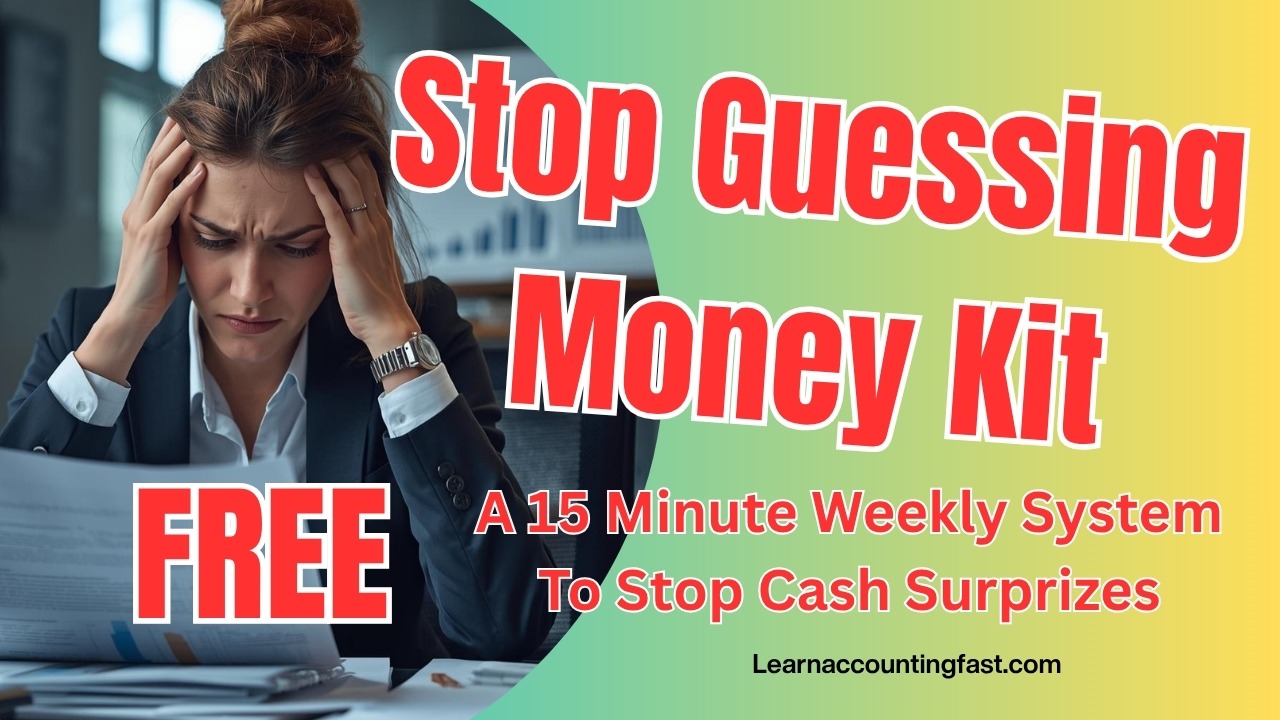
This is exactly why I created the Stop Guessing Money Kit.
It gives small business owners simple templates and checklists to do a 15-minute weekly money check.
No jargon. No confusion.
Just a clear way to see your cash, bills, profit, and next action.
Because the goal is simple:

They also ask:
“Is cash getting stronger?”
That is the question that protects the business.
The Big Lesson: Get Closer To Your Cash
When prices are rising, small business owners must get closer to their cash.
Not further away. This is not the time to guess.
This is not the time to wait until the end of the month.
This is not the time to hand everything to the accountant and hope for the best.
Your accountant may help with reports.
But you must understand the simple story of your own money.
Because it is your business.
Your bills. Your customers. Your cash. Your future.
The owner does not need to know everything.
But the owner must know enough to make better decisions.
That is the real purpose of business money management.
Not to impress anyone.
Not to sound clever.
But to protect the business and make better choices.
Cash Is Blood. Keep It Flowing.
Here is the simple truth.
Profit is performance.
Cash is survival.
A business can live through a bad week.
It can live through a slow month.
It can live through rising prices.
But it cannot live long without cash.
So start with one simple habit.
Check your cash every week.
Write down what is coming in.
Write down what is going out.
Spot the gap. Take one clear action. That is how you stop guessing.
That is how you protect the business.
That is how you stay calm when the world gets noisy.
And that is how small business owners can operate in a high-price world without feeling lost, embarrassed, or out of control.
A Simple Next Step
This is exactly why I created the Stop Guessing Money Kit.
It gives small business owners simple templates and checklists to do a 15-minute weekly money check.
No jargon. No confusion.
Just a clear way to see your cash, bills, profit, and next action.
Because the goal is simple:
Stop cash surprises. Know what to do next.
Latest Posts
AI for Small Business:
Do You Really Need AI Skills?

AI means smart computer tools that can do tasks people usually do. Some AI can write text, make pictures, answer questions, or look at data and find patterns.... READ: AI for Small Business
Good Debt vs Bad Debt:
How Debt Can Build Wealth

Most people are taught that all debt is bad. Pay off the house. Cut up the credit cards.Never borrow money. Stay debt-free.
How To Help Your Business
Survive A Shaky Economy

A business does not survive by guessing. A business survives by watching cash, protecting customers, cutting waste....
7 Money Moves Every
Small Business Should Make

This is why cash flow management tips matter more in uncertain times. When things get shaky... READ: 7 Money Moves Every Small Business Should Make
Prevent Financial
Statement Fraud Using Ai

The 7 internal controls to prevent fraud (and stop financial statement fraud early).These are the “boring” habits that protect smart
6 Secret Business
Tips

Ever feel like you’re working hard… but the money still feels “mysterious”? But you can’t always tell what’s actually moving the needle?


Disclaimer: The content shared on this blog and in these videos is for informational and educational purposes only. Despite my 30 years of experience as a business owner, I am not a certified financial advisor, accountant, or legal professional. The insights and tips shared are based on personal experiences and should not be taken as professional financial or legal advice. For financial, legal, or professional advice, please consult with a certified professional in the respective field. I disclaim any liability or responsibility for actions taken based on any information found in this blog or these videos.
This is general education only. For tax advice, speak to a qualified tax professional in your country.
Copyright Learn Accounting Fast - All Rights Reserved 2025
Facebook
Instagram
X
LinkedIn
Youtube